English
 русский
 Español
News
Home / News / Industry News / What Should You Know Before Deploying IP Gateway Series Headend Equipment?

Welcome to Prevail Website! Optical Communication Equipment Manufacturers and Suppliers in China

Content
The shift from traditional broadcast infrastructure to IP-based signal distribution has accelerated dramatically over the past decade. At the center of this transition sits a critical piece of hardware: the IP gateway series headend equipment. Whether you are building a cable television headend, deploying an IPTV system for a hotel or residential complex, or upgrading a broadcast facility to carry OTT content alongside traditional RF signals, the IP gateway headend is the device that receives, processes, transcodes, and redistributes video streams across your network. Choosing the wrong system — or misunderstanding what a given unit is actually capable of — leads to signal degradation, scalability bottlenecks, and expensive mid-project overhauls. This guide covers everything you need to evaluate before making a deployment decision.
An IP gateway series headend unit serves as the conversion and aggregation hub between incoming signal sources and outgoing IP-based distribution networks. In practical terms, it accepts signals from multiple input formats — satellite transponders, terrestrial antennas, cable feeds, fiber inputs, or IP streams — and processes them into standardized IP output streams that can be delivered over Ethernet, fiber, or coaxial networks to end-user devices.
The core functional stages inside a typical IP gateway headend unit include:
Higher-end units in the IP gateway series also incorporate built-in SNMP-based network management, web-based GUI configuration interfaces, redundant power supplies, and hot-swap modular input cards — features that are essential for professional broadcast and large-scale hospitality deployments where downtime carries significant commercial consequences.
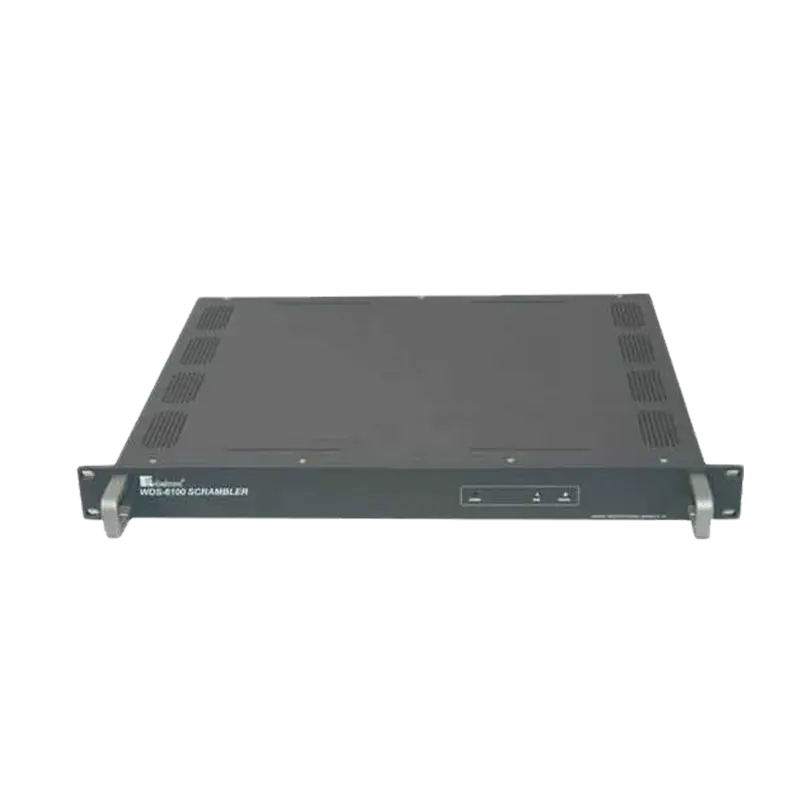
IP gateway headend systems are not one-size-fits-all. Different deployment environments impose different technical requirements, and selecting a unit without mapping its specifications to your specific use case is a common procurement mistake.
Hotel deployments typically require a compact, all-in-one headend that can receive 20 to 80 satellite or terrestrial channels, transcode them to H.264 or H.265, and deliver them over the hotel's existing IP network to IPTV set-top boxes or smart TVs. Key requirements in this context include a low channel-count but high reliability, a simple browser-based management interface that non-specialist hotel IT staff can operate, and compliance with local free-to-air broadcasting regulations. Scalability matters less here than stability and ease of maintenance.
Operator-grade deployments are far more demanding. A regional cable operator may need to process hundreds of channels simultaneously, maintain conditional access systems for subscriber management, support EPG (Electronic Programme Guide) data injection, and deliver streams at guaranteed quality levels under regulatory scrutiny. In this context, the IP gateway series equipment must offer high channel density per rack unit, enterprise-grade redundancy (dual power supplies, RAID storage for recording functions, failover input switching), and full SNMP/TR-069 management integration with the operator's network management system.
Universities, hospitals, corporate campuses, and sports stadiums increasingly deploy private IPTV systems to distribute broadcast television and internal content channels across their IP networks. These installations prioritize multicast efficiency — the ability to deliver a single stream to thousands of simultaneous viewers without multiplying bandwidth consumption — alongside integration with existing Active Directory or LDAP systems for access control, and compatibility with a range of endpoint devices from smart TVs to desktop browsers.
When evaluating specific IP gateway series headend models, the following specifications have the greatest practical impact on system performance and long-term suitability:
| Specification | What to Look For | Why It Matters |
| Input Signal Types | DVB-S/S2/S2X, DVB-T/T2, DVB-C, ASI, IP | Must match your local signal infrastructure and future input sources |
| Channel Capacity | 8 to 500+ simultaneous channels depending on model | Determines scalability ceiling without adding hardware |
| Transcoding Support | MPEG-2 to H.264/H.265 real-time hardware transcoding | Reduces output bandwidth by 50–70% versus MPEG-2 passthrough |
| CAM/CI Slots | Multiple CI or CI+ slots with multi-decrypt capability | Enables simultaneous decryption of channels from different operators |
| Output Interfaces | GbE Ethernet (1G/10G), ASI, optional RF output | Determines network integration flexibility and downstream compatibility |
| Stream Protocols | UDP multicast, RTP, RTSP, HLS, RTMP | Broader protocol support enables compatibility with more endpoint types |
| Redundancy Features | Dual PSU, input failover, RAID storage | Critical for 24/7 broadcast environments with zero downtime tolerance |
| Management Interface | Web GUI, SNMP v2/v3, TR-069, API access | Determines integration with existing NMS and remote management capability |
One of the most frequent sources of procurement errors is a mismatch between the input signal standards supported by the headend equipment and the actual signals available at the installation site. This seems obvious in principle, but the growing diversity of DVB standards — particularly the shift from DVB-S to DVB-S2X for high-throughput satellite services, and from DVB-T to DVB-T2 in many European and Asian markets — means that a unit purchased even three to four years ago may not natively support newer signal formats without a firmware update or hardware expansion card.
Before specifying input modules, confirm the following with your signal source providers:
IP gateway headend systems typically offer two fundamental processing modes for handling incoming video content: passthrough and transcoding. Understanding the tradeoffs between these modes is essential for optimizing bandwidth use and output quality.
In passthrough mode, the headend decodes the incoming transport stream, descrambles encrypted content if necessary, remultiplexes channels, and re-encapsulates them into IP packets without altering the video codec or bitrate. This approach preserves the original broadcast quality exactly but delivers streams at the same bitrate as the source — typically 3 to 8 Mbps per standard-definition channel and 8 to 20 Mbps per high-definition channel in MPEG-2. For networks with abundant bandwidth, passthrough is the simplest and most reliable option. It also imposes lower processing load on the headend hardware, which allows higher channel densities per unit.
Transcoding re-encodes the video using a more efficient codec — most commonly H.264 (AVC) or H.265 (HEVC). H.264 delivers comparable visual quality to MPEG-2 at roughly half the bitrate; H.265 achieves similar quality at half the bitrate of H.264 again. For networks where bandwidth is constrained — a shared hotel LAN, a cellular backhaul link, or a long-distance IPTV distribution network — transcoding is not just beneficial, it may be essential for making the system viable. The tradeoff is increased hardware cost (transcoding requires dedicated DSP or GPU processing resources), marginally higher latency, and the need for careful quality monitoring to detect encoding artifacts under varying content complexity.
The efficiency of an IP gateway headend deployment depends heavily on how the downstream IP network is architected to carry the output streams. In IPTV systems, IP multicast is the standard delivery mechanism for live television channels — a single multicast stream serves all viewers simultaneously, regardless of how many people are watching, avoiding the bandwidth multiplication that unicast delivery would create.
For multicast to function correctly across your network, several infrastructure conditions must be in place:
IP gateway headend equipment represents a significant capital investment, and the vendor relationship extends well beyond the initial purchase. Firmware updates, CAM module compatibility, hardware repair and spare parts availability, and technical support quality all determine the true cost of ownership over a 5 to 10 year deployment lifecycle.
When evaluating vendors, request specific information on the following points before committing to a purchase:
IP gateway series headend equipment sits at the operational core of any modern video distribution system. Getting the specification right — matching input capabilities to your signal sources, choosing the appropriate processing mode, planning the downstream network architecture, and partnering with a vendor who provides genuine long-term support — determines whether your investment delivers reliable, high-quality service for a decade or becomes a source of ongoing operational frustration. The time spent on thorough pre-deployment evaluation is invariably the most cost-effective investment in the entire project.
top

E-mail:[email protected]

Telphone:+86-15967387077

FAX:+86-0571-82554407

Phone:+86-15967387077
QR code on
mobile phone