How Do XPON ONU and OLT Devices Work Together to Power Modern Broadband Data Access Networks?
What XPON Means and Why It Matters for Broadband Access
XPON is an umbrella term that encompasses the family of Passive Optical Network (PON) standards used to deliver high-speed broadband data to homes, businesses, and enterprises. The "X" is a placeholder representing different generations and variants of the technology, including EPON (Ethernet PON), GPON (Gigabit PON), XGS-PON (10-Gigabit Symmetrical PON), and NG-PON2 (Next-Generation PON 2). Each standard defines the speeds, wavelengths, and protocols used, but all share the same fundamental architecture: a fiber-optic network that carries data from a central office to multiple end-users using entirely passive optical components — no powered equipment between the exchange and the subscriber.
This passive architecture is what makes PON-based broadband economically and technically superior to active optical networks or traditional copper-based DSL infrastructure. There are no powered nodes or active amplifiers in the distribution network, which reduces operational costs, eliminates power-related points of failure, and dramatically lowers maintenance requirements. For internet service providers (ISPs) and network operators, deploying an XPON system means significantly lower total cost of ownership compared to legacy access technologies at comparable or superior performance levels.
At the heart of any XPON broadband access network are two key pieces of active equipment — one at each end of the fiber link: the OLT (Optical Line Terminal) at the service provider's central office or headend, and the ONU (Optical Network Unit) or ONT (Optical Network Terminal) at the subscriber's premises. Understanding the role and working principle of each — and what separates capable manufacturers from commodity suppliers — is essential for anyone specifying, deploying, or evaluating broadband access infrastructure.
The OLT: The Network's Central Controller and Traffic Manager
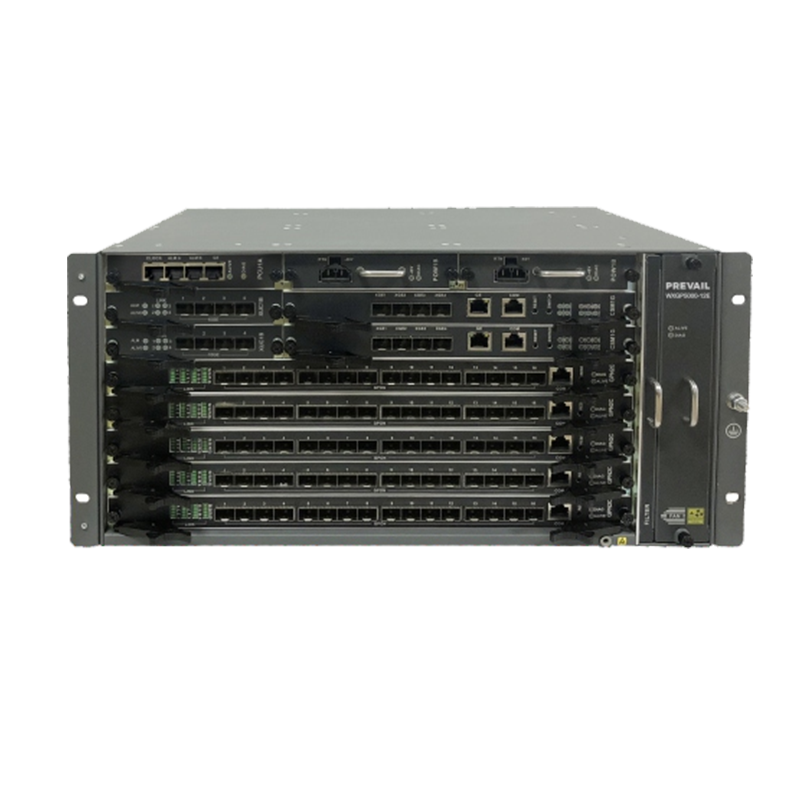
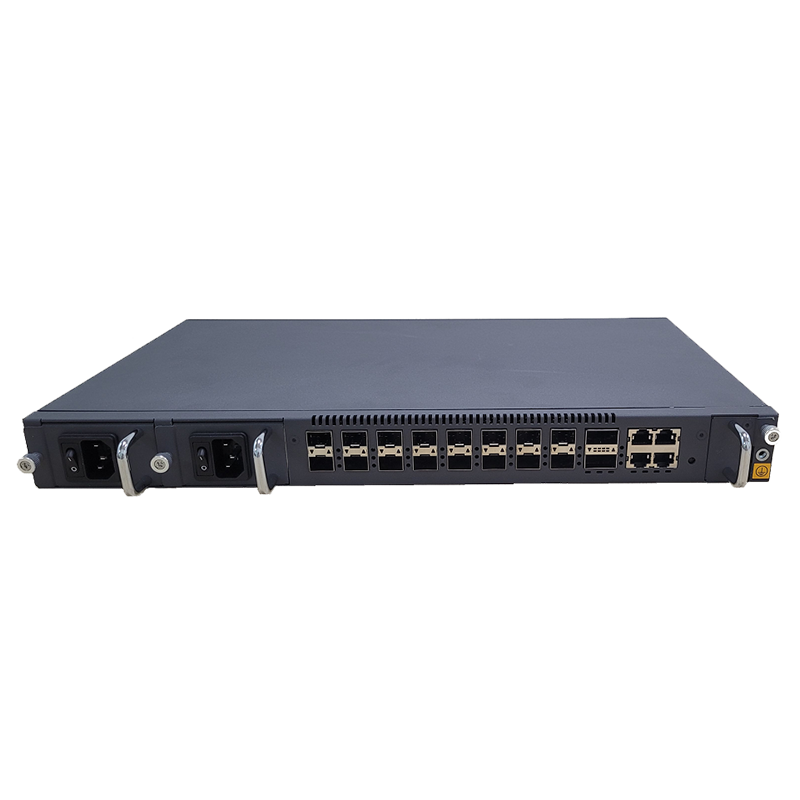
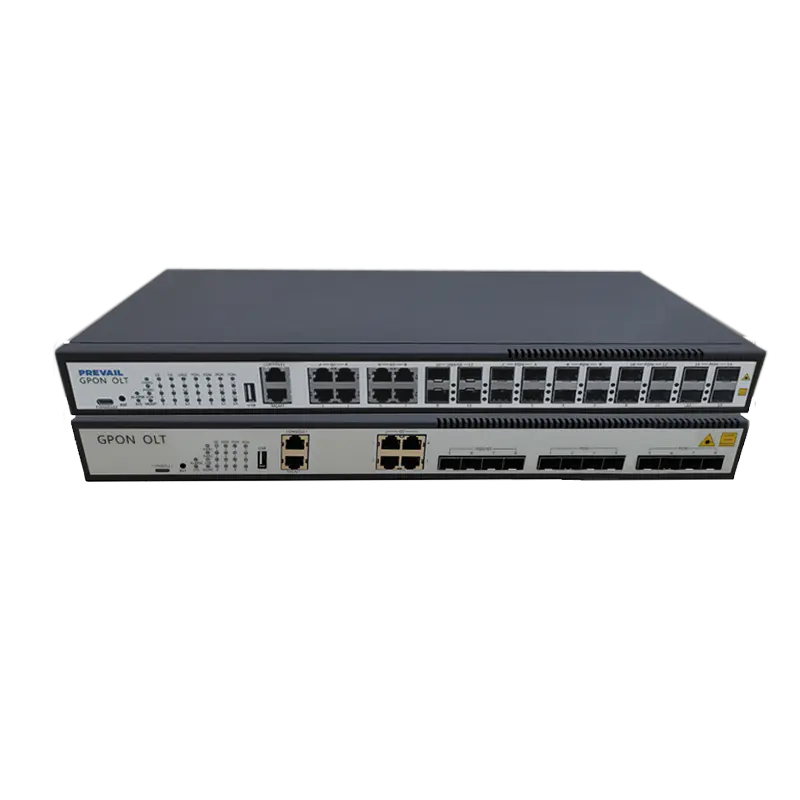
The Optical Line Terminal is the central hub of an XPON broadband access system. It sits at the service provider's point of presence — typically a central office, data center, or streetside cabinet — and serves as the interface between the operator's core IP network and the passive optical distribution network that fans out to subscribers. Every data packet entering or leaving the PON passes through the OLT, making it the most performance-critical and feature-dense component in the entire access architecture.
Downstream Transmission: Broadcasting to All ONUs
In the downstream direction (from OLT to subscribers), the OLT transmits data as a continuous broadcast signal on a dedicated optical wavelength — 1490 nm for data in GPON, for example. This signal travels down the fiber trunk and is split by passive optical splitters in the distribution network, with splitting ratios typically ranging from 1:32 to 1:128. Every ONU connected to the PON receives the entire downstream signal, but each ONU only processes and decrypts the data frames addressed to it, ignoring all others. AES-128 encryption is used in GPON and XGS-PON to ensure that one subscriber cannot read another's data despite receiving the same optical signal.
Upstream Transmission: Time-Division Multiple Access Control
The upstream direction (from ONUs back to the OLT) presents a more complex challenge. All ONUs share a single upstream wavelength — 1310 nm in GPON — but they cannot transmit simultaneously without colliding. The OLT solves this through Time-Division Multiple Access (TDMA): it allocates precise transmission windows to each ONU using a process called Dynamic Bandwidth Allocation (DBA). Each ONU transmits only within its assigned time slot, and the OLT's burst-mode receiver reassembles the upstream traffic from all ONUs into a coherent data stream. DBA algorithms allow the OLT to redistribute unused bandwidth dynamically, ensuring that ONUs with high traffic demand receive additional capacity while idle ONUs do not waste shared upstream resources.
OLT Management and Service Functions
Beyond optical transport, a high-quality OLT from an experienced XPON manufacturer performs extensive Layer 2 and Layer 3 functions. These include VLAN management for service separation, QoS enforcement for prioritizing voice and video traffic over best-effort data, multicast management for IPTV delivery, and DHCP relay for IP address assignment. Enterprise-grade OLTs also support TR-069 and NETCONF/YANG for remote ONU management, SNMP and syslog for network monitoring, and redundant uplink interfaces for carrier-grade reliability.
The ONU: Converting Optical Signals Into Usable Subscriber Services
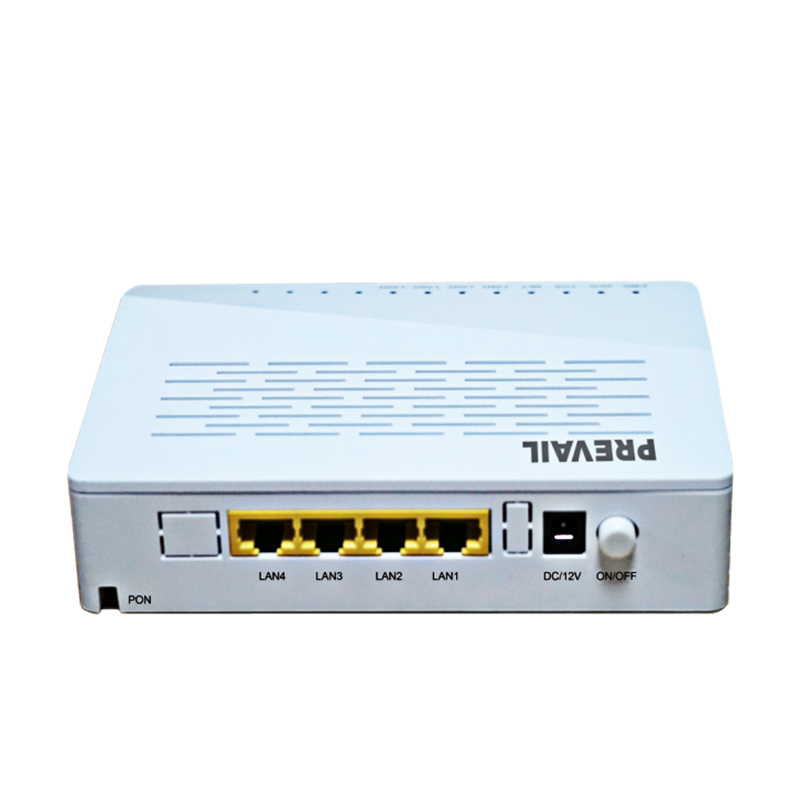
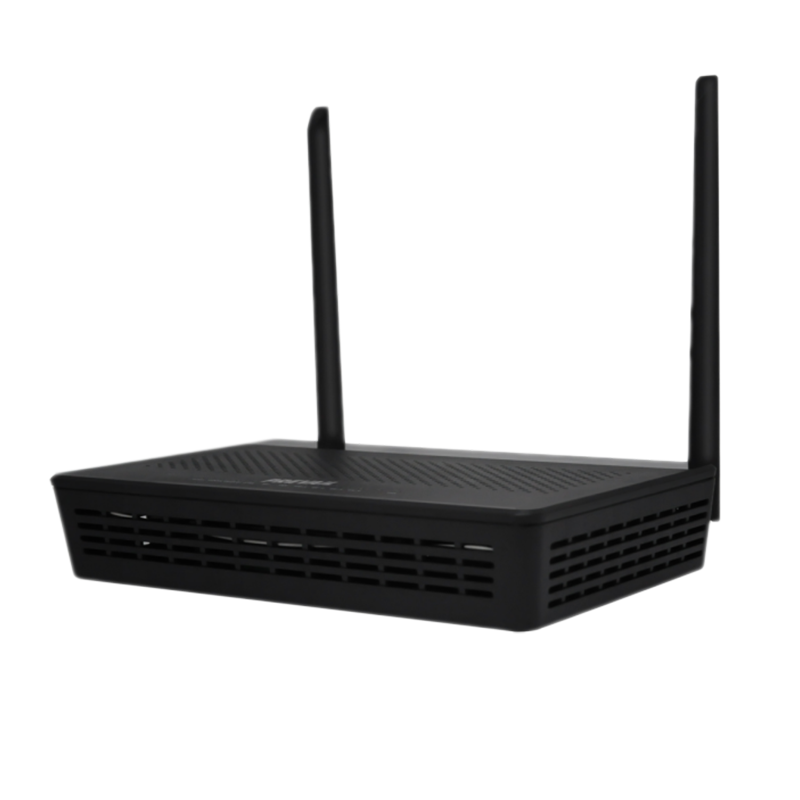
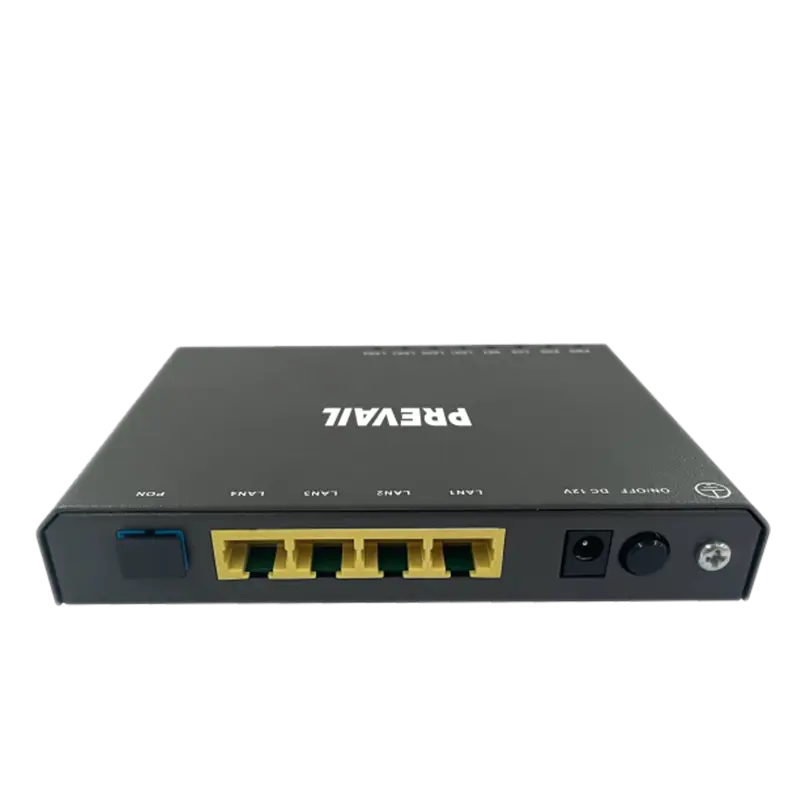
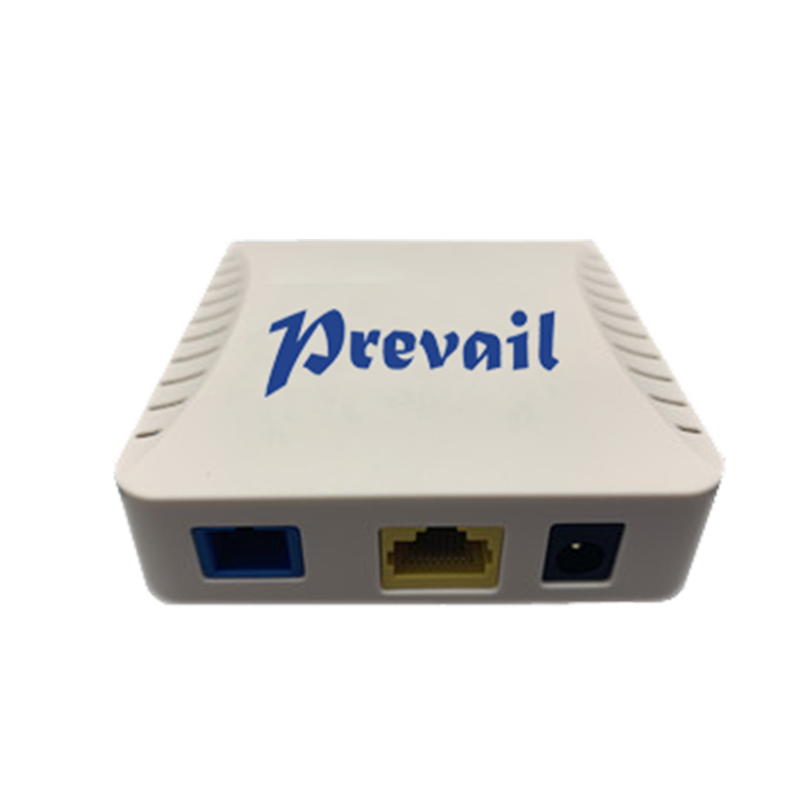
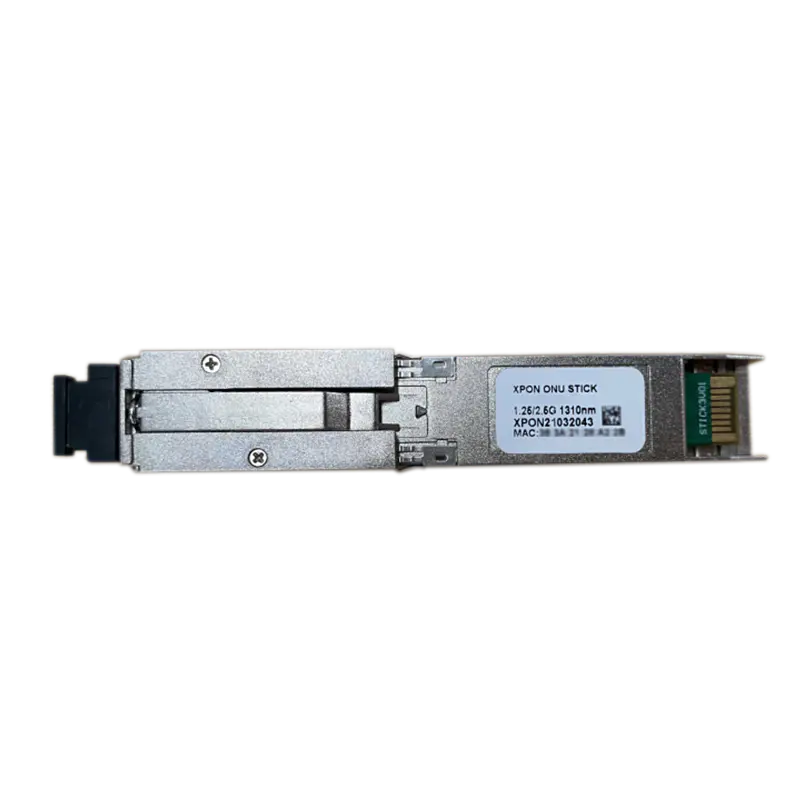
The Optical Network Unit is the subscriber-side termination point of the XPON system. It receives the downstream optical signal from the OLT via the passive fiber distribution network, converts it to electrical signals, and delivers internet, voice, and video services to the end-user's devices. In the upstream direction, it collects data from the subscriber's local network, converts it to optical pulses, and transmits them to the OLT within the precisely timed windows allocated by the OLT's DBA system.
ONU Registration and Authentication
When an ONU is powered on and connected to the PON, it enters a registration process controlled by the OLT. In GPON, this process is defined by the ITU-T G.984 standard and involves the ONU transmitting its unique Serial Number (SN) to the OLT during a quiet window when no other ONUs are transmitting. The OLT assigns the ONU a temporary Transmission Container (T-CONT) identity and, after verifying the SN against a provisioned list or through auto-discovery, allocates the ONU a permanent Optical Network Unit Identifier (ONU-ID). This registration process ensures that only authorized ONUs gain access to the network and establishes the timing relationship that enables upstream TDMA coordination.
Service Delivery Interfaces and Capabilities
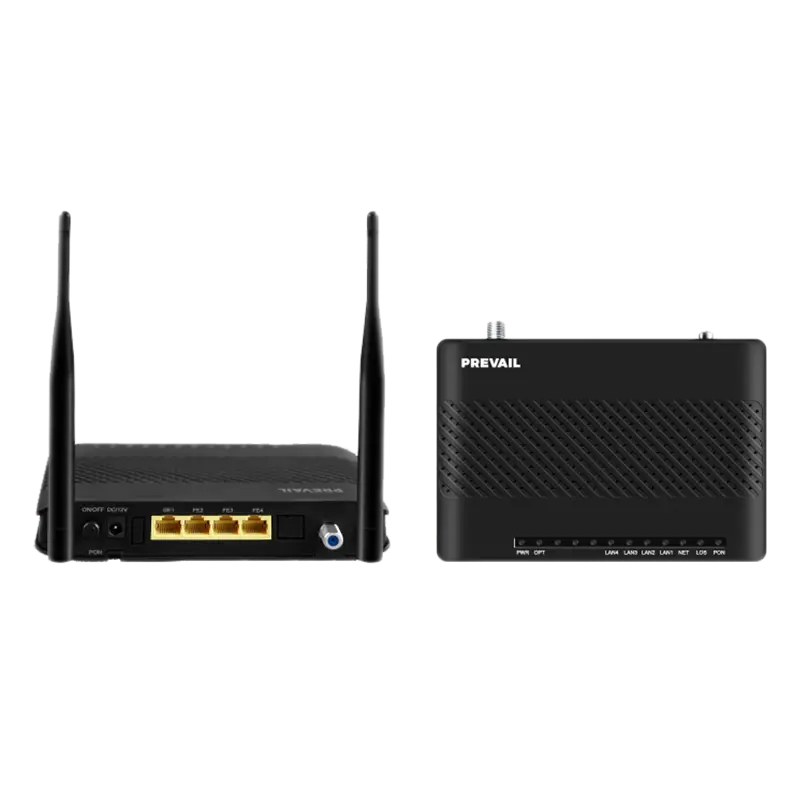
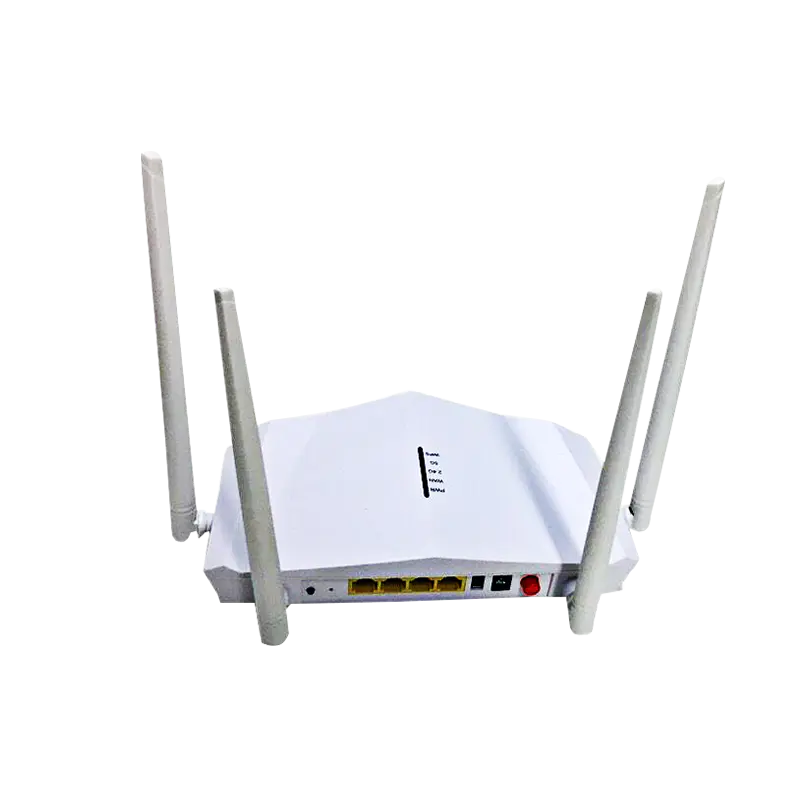
Modern XPON ONUs from leading manufacturers are multi-service devices capable of delivering several types of subscriber services simultaneously. Depending on the form factor and target market — residential, small business, or enterprise — an ONU may include:
- GE/2.5GE Ethernet ports for broadband internet delivery to routers, switches, or directly to PCs.
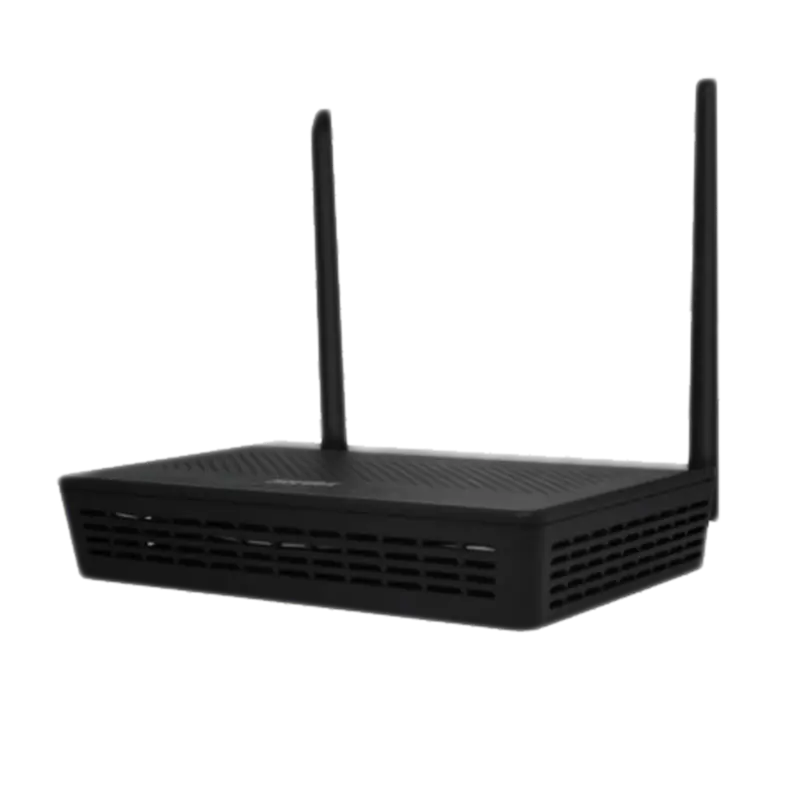
- Wi-Fi 5 or Wi-Fi 6 (802.11ax) interfaces in ONT variants that combine the optical termination unit with a wireless access point.
- POTS (Plain Old Telephone Service) ports with built-in VoIP processing for delivering telephone services over the fiber connection.
- RF coaxial output for delivering broadcast cable TV signals alongside broadband in GPON deployments that include an RF overlay wavelength at 1550 nm.
- USB ports for sharing storage devices or connecting management tools locally.
XPON Standards Compared: What Manufacturers Must Support
One of the most important considerations when evaluating XPON ONU and OLT manufacturers is the range of PON standards their equipment supports. Network operators frequently deploy multi-generation networks, and the ability to support multiple standards on a single OLT platform — or to field ONUs that can operate across different PON generations — directly affects long-term investment protection.
| Standard |
Downstream Speed |
Upstream Speed |
Max Split Ratio |
Primary Use Case |
| EPON (IEEE 802.3ah) |
1 Gbps |
1 Gbps |
1:32 |
Legacy residential FTTH |
| GPON (ITU-T G.984) |
2.488 Gbps |
1.244 Gbps |
1:128 |
Mass residential FTTH/B |
| 10G-EPON (IEEE 802.3av) |
10 Gbps |
1 / 10 Gbps |
1:32 |
Upgraded EPON networks |
| XGS-PON (ITU-T G.9807.1) |
10 Gbps |
10 Gbps |
1:128 |
Fiber-to-the-home, 5G backhaul |
| NG-PON2 (ITU-T G.989) |
40 Gbps |
10 Gbps |
1:256 |
Enterprise, mobile fronthaul |
Table 1: Key XPON standards, their performance specifications, and primary deployment use cases.
Leading XPON OLT manufacturers now offer combo PON line cards that can serve GPON and XGS-PON ONUs simultaneously on the same physical PON port, using separate wavelengths. This capability is critical for operators migrating from GPON to XGS-PON without replacing the entire installed ONU base — a migration path that protects existing subscriber investments while enabling new high-speed service tiers.
What Separates Leading XPON Manufacturers From Commodity Suppliers
The global market for XPON broadband access equipment includes dozens of manufacturers, ranging from large integrated vendors to small ODM/OEM suppliers. The difference in product quality, interoperability, software depth, and long-term support capability is substantial. For network operators, the consequences of choosing a manufacturer based on unit price alone can include interoperability failures, limited remote management capability, and software vulnerabilities that are never patched.
Interoperability and Standard Compliance
Genuine XPON interoperability — the ability for ONUs from one manufacturer to work correctly with OLTs from another — requires strict adherence to ITU-T and IEEE standards at both the optical layer and the OMCI (ONU Management and Control Interface) protocol layer. OMCI is the management channel through which the OLT configures and monitors ONUs, and its implementation quality varies significantly across manufacturers. Reputable XPON equipment suppliers participate in BBF (Broadband Forum) interoperability testing events and carry certifications that validate their equipment works correctly in multi-vendor environments.
Software Depth and Remote Management
For large-scale broadband deployments, the software stack running on both the OLT and ONU is at least as important as the hardware. OLT software must support automated ONU provisioning, real-time performance monitoring with per-ONU optical power readings, automated alarm management, and integration with OSS/BSS systems via standard APIs. ONU software should support remote firmware upgrades (OMCI-based or TR-069), remote diagnostics, and configuration rollback to prevent service outages caused by failed configuration pushes.
Optical Performance and Reliability
The optical components inside XPON ONUs and OLTs — lasers, photodetectors, and transceiver modules — determine the system's reach, power budget, and long-term reliability. Class B+ and Class C+ optical budgets in GPON (allowing 28 dB and 32 dB respectively) require precisely characterized transmitter output power and receiver sensitivity. Manufacturers who use rigorously tested optical components and conduct burn-in testing at elevated temperatures produce equipment with measurably lower field failure rates — a critical factor for operators managing tens of thousands of deployed ONUs.
Deployment Scenarios and the Role of XPON Equipment in Each
XPON ONU and OLT equipment is deployed across a wide range of broadband access scenarios, each with distinct technical and operational requirements. Understanding these deployment contexts clarifies the specific demands placed on the equipment and its manufacturers.
- FTTH (Fiber to the Home): The most common deployment model for residential broadband. The ONU is installed inside the subscriber's home, typically on an interior wall or shelf. Compact form factor, low power consumption, and a built-in Wi-Fi access point are key requirements for residential ONUs in this scenario.
- FTTB (Fiber to the Building): A single ONU serves an entire apartment building or office block, with the last segment from the ONU to individual subscribers delivered over existing in-building copper or Ethernet cabling. Multi-port ONUs with integrated DSLAM or Ethernet switch capabilities are used in this scenario.
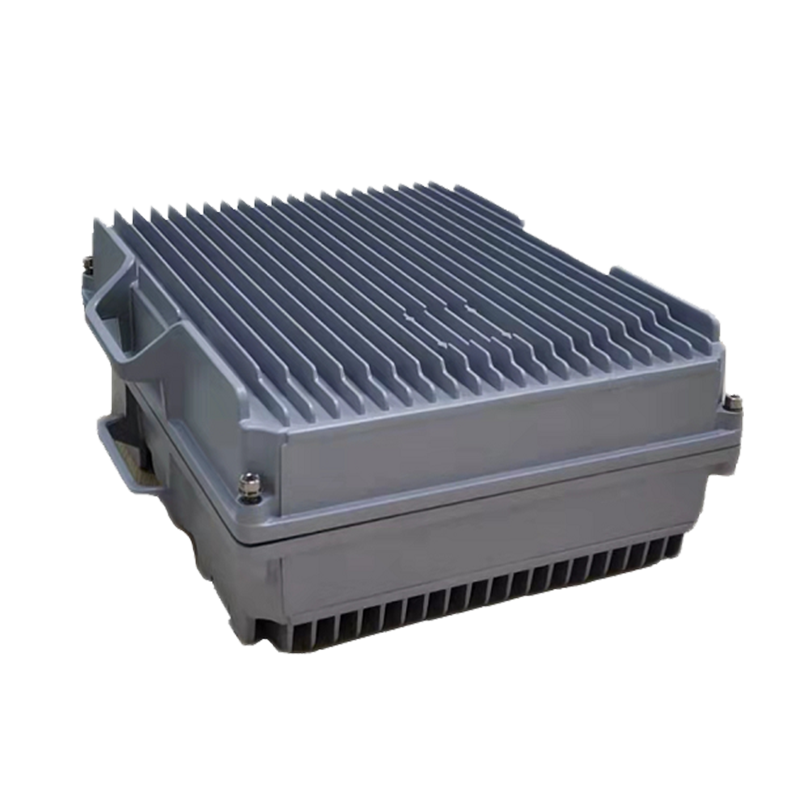
- FTTC (Fiber to the Cabinet): The ONU is installed in a street cabinet, with subscribers connected via short VDSL2 or G.fast copper loops. ONU equipment in this scenario must be ruggedized for outdoor environments, including wide operating temperature ranges and protection against moisture and voltage surges.
- Enterprise and Business Services: ONUs deployed for enterprise customers require SFP uplinks, static routing, Layer 3 functionality, and MPLS support to deliver business-grade connectivity with service-level agreements. Some enterprise ONUs also include integrated firewall and NAT capabilities.
- 5G Fronthaul and Midhaul: XGS-PON and NG-PON2 are increasingly used to connect 5G base stations to the core network. This application demands extremely low and deterministic latency, precision timing delivery (IEEE 1588v2 / SyncE), and high upstream capacity — requirements that only the most technically advanced OLT platforms can satisfy.
Key Evaluation Criteria When Selecting an XPON Equipment Manufacturer
Network operators and system integrators evaluating XPON ONU and OLT suppliers should apply a structured set of criteria that goes beyond headline specifications and unit pricing. The following factors distinguish manufacturers capable of supporting large-scale, long-term broadband access deployments from those suited only to small or low-complexity installations:
- PON standard breadth: Does the OLT platform support GPON, XGS-PON, and 10G-EPON on the same chassis, with a migration path to NG-PON2?
- ONU port density and scalability: How many ONU ports does the OLT support per chassis, and can it scale to serve tens of thousands of subscribers without a forklift upgrade?
- OMCI compliance depth: Does the ONU support the full OMCI ME (Managed Entity) set required for multi-service delivery including VoIP, IPTV multicast, and QoS?
- Security capabilities: Does the OLT enforce AES encryption on downstream traffic, and does the ONU support 802.1X port authentication for connected devices?
- Long-term software support commitment: What is the manufacturer's stated firmware support lifecycle, and how frequently are security patches released?
- Third-party interoperability test results: Has the manufacturer published or shared results from Broadband Forum or operator-led interoperability testing with third-party OLTs and ONUs?
XPON broadband access infrastructure is a long-lived investment. OLT platforms installed today will serve subscribers for a decade or more, and the ONUs deployed in homes and businesses represent millions of individual decisions about product quality and manufacturer reliability. Choosing an XPON equipment manufacturer based on a rigorous technical and commercial evaluation — rather than on unit price alone — is the single most important decision in any fiber broadband access project, and the quality of that decision will be reflected in network performance, subscriber satisfaction, and operational costs for years to come.
 English
 русский
 Español