English
 русский
 Español
News
Home / News / Industry News / What Is Data Broadband Access Equipment and Why Does It Matter for Modern Networks?

Welcome to Prevail Website! Optical Communication Equipment Manufacturers and Suppliers in China

Content
Data broadband access equipment refers to the hardware and systems that enable end users — whether residential, commercial, or industrial — to connect to a broadband network at high speeds. It sits at the boundary between a service provider's core network and the subscriber's premises, managing the flow of data traffic in both directions. Without this equipment, the last-mile connection that bridges a central office or data hub to individual users simply would not function reliably or at meaningful speeds.
The category encompasses a wide range of devices and platforms, including Digital Subscriber Line Access Multiplexers (DSLAMs), Optical Line Terminals (OLTs), Cable Modem Termination Systems (CMTS), and Fixed Wireless Access (FWA) base stations. Each type serves a distinct access technology and is engineered around specific bandwidth requirements, distance limitations, and deployment environments. As global demand for reliable internet connectivity continues to accelerate, the role of this equipment has never been more critical.
Each broadband access technology relies on a distinct category of equipment. Understanding the differences helps network planners and procurement teams select the right solution for their infrastructure goals.
DSLAMs are deployed in telephone exchange buildings or remote cabinets and aggregate DSL signals from hundreds or thousands of subscribers over existing copper telephone lines. They convert the analog signals from subscriber lines into digital packets for transmission across the provider's IP backbone. Modern VDSL2 and G.fast DSLAMs can deliver download speeds of up to 1 Gbps over short copper loops, making them a viable option in neighborhoods where fiber deployment is not yet economically feasible. However, performance degrades significantly with line length, which limits their utility in rural or dispersed environments.
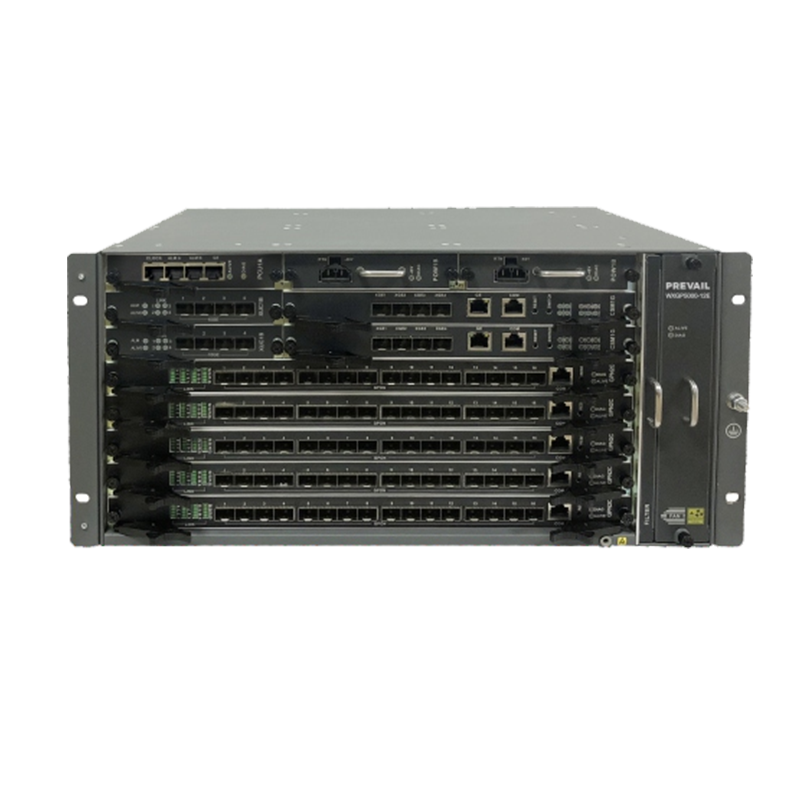
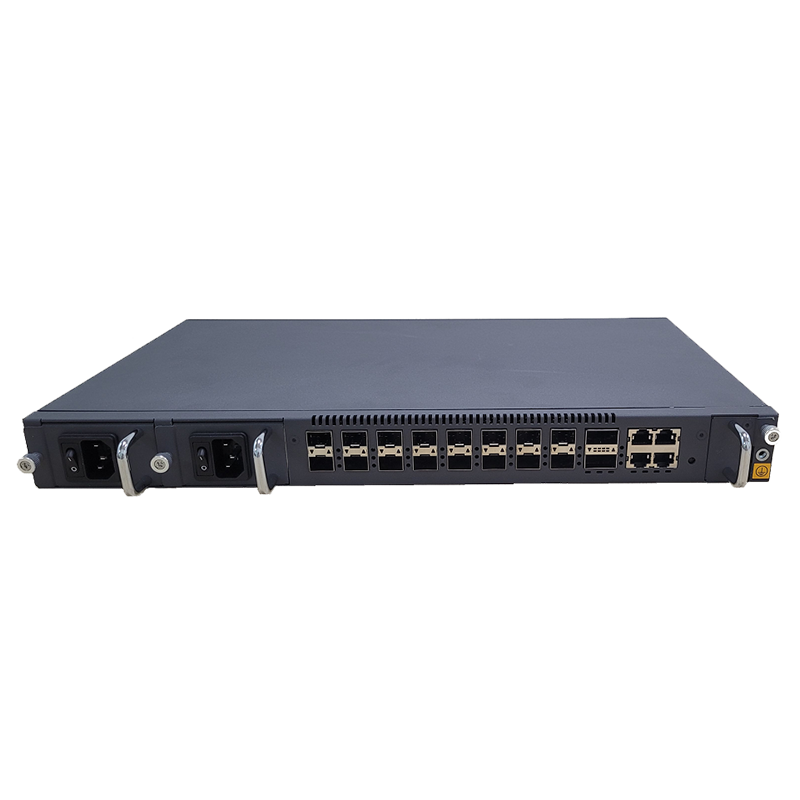
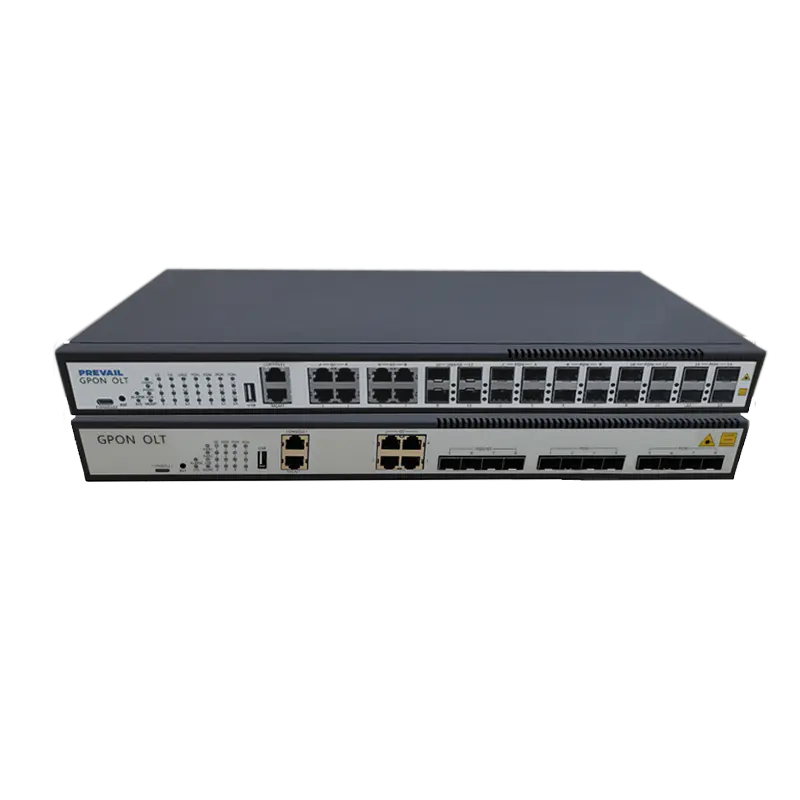
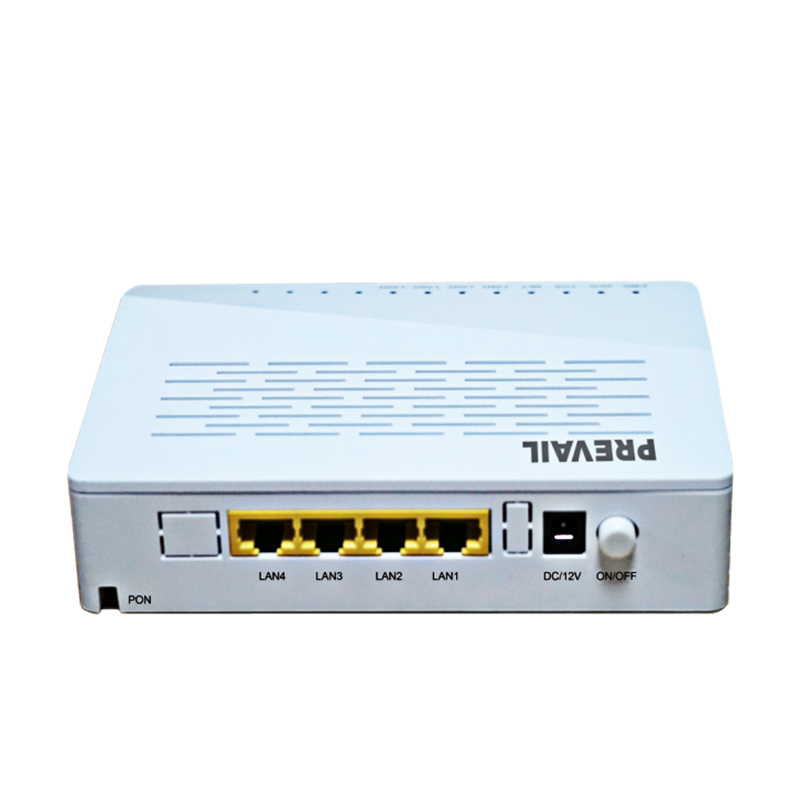
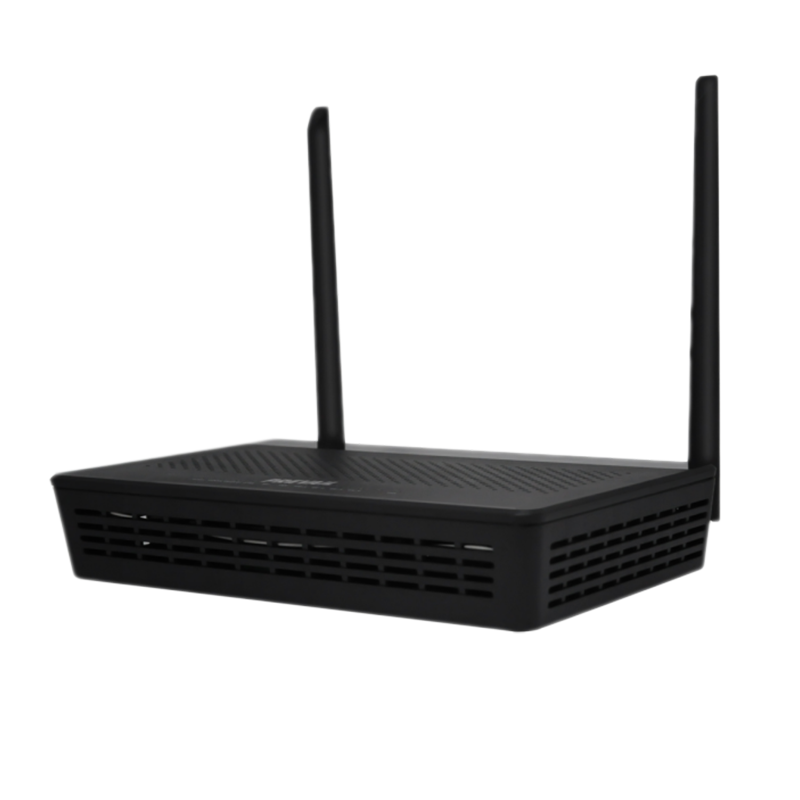
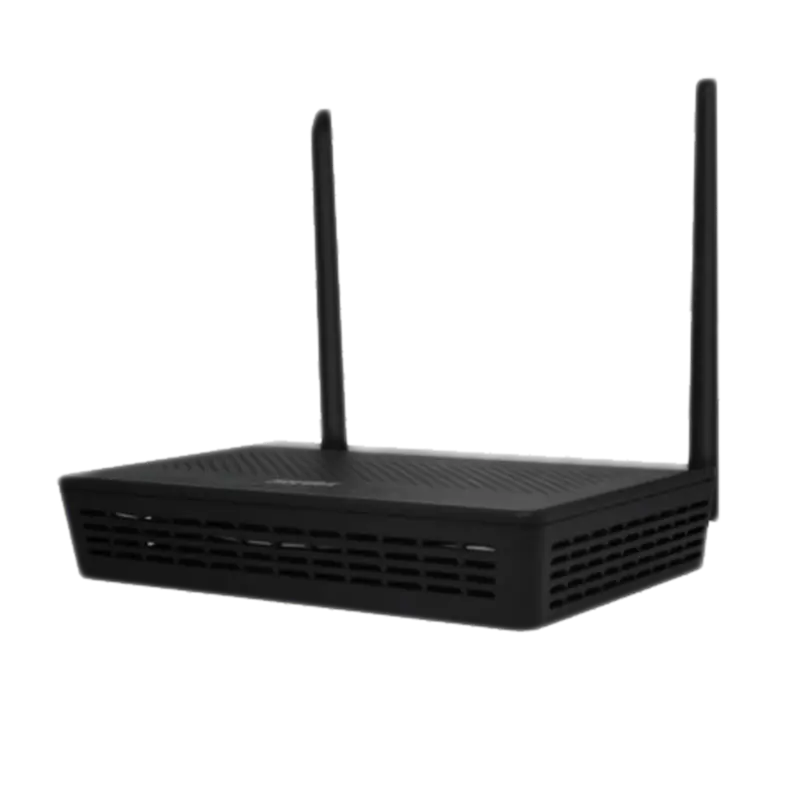
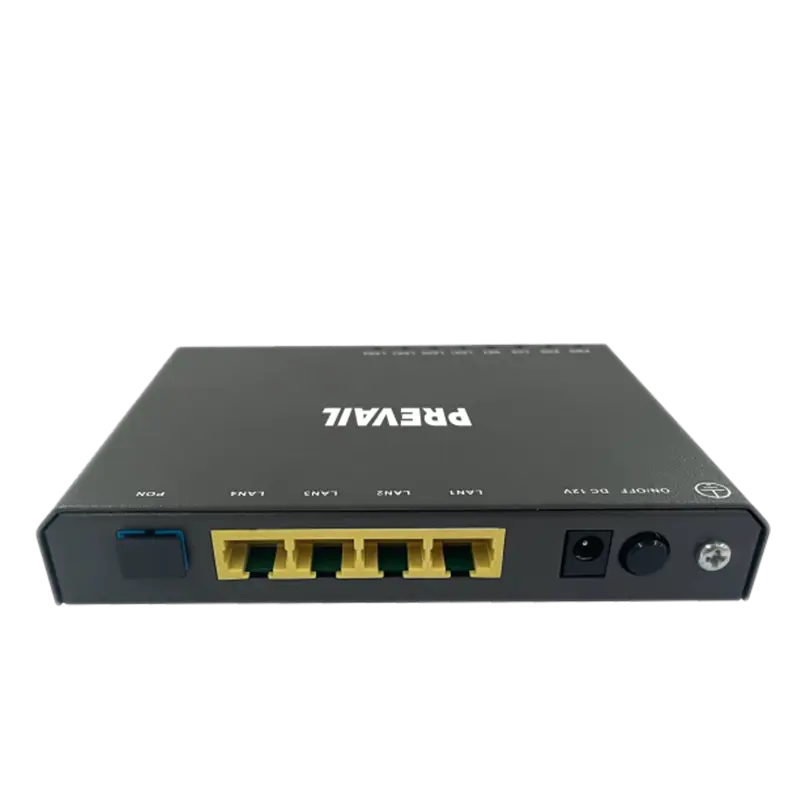
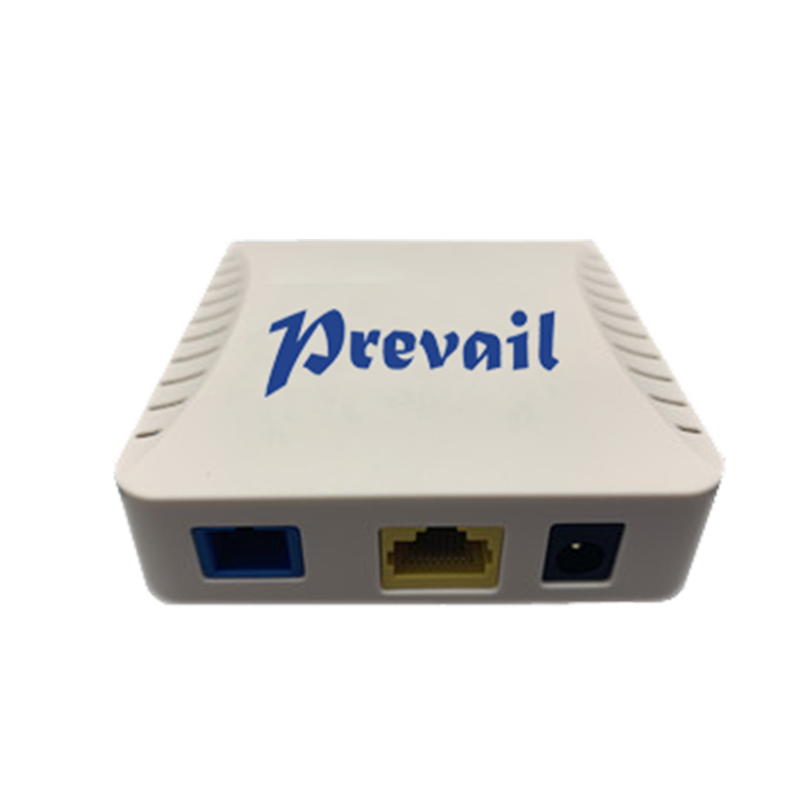
OLTs are the service provider-side equipment in Passive Optical Network (PON) architectures. They communicate with Optical Network Units (ONUs) or Optical Network Terminals (ONTs) at the subscriber end through a shared fiber strand and passive optical splitters. A single OLT port can serve dozens of end users simultaneously. XGS-PON and NG-PON2 standards now allow symmetrical 10 Gbps speeds per wavelength, making OLTs the backbone of fiber-to-the-home (FTTH) deployments worldwide. OLTs are valued for their low operational cost, minimal active components in the field, and scalability.
CMTS equipment terminates cable modem connections from subscribers using hybrid fiber-coaxial (HFC) networks. Deployed in cable headend facilities, a CMTS manages upstream and downstream channel bonding across the coaxial distribution network. DOCSIS 3.1 CMTS platforms support download speeds exceeding 10 Gbps and upload speeds of 1–2 Gbps. The evolution toward Remote PHY and Remote MACPHY architectures — collectively known as Distributed Access Architecture (DAA) — is pushing PHY-layer processing closer to the node, reducing fiber capacity requirements and enabling cable operators to compete with FTTH providers on speed and latency.
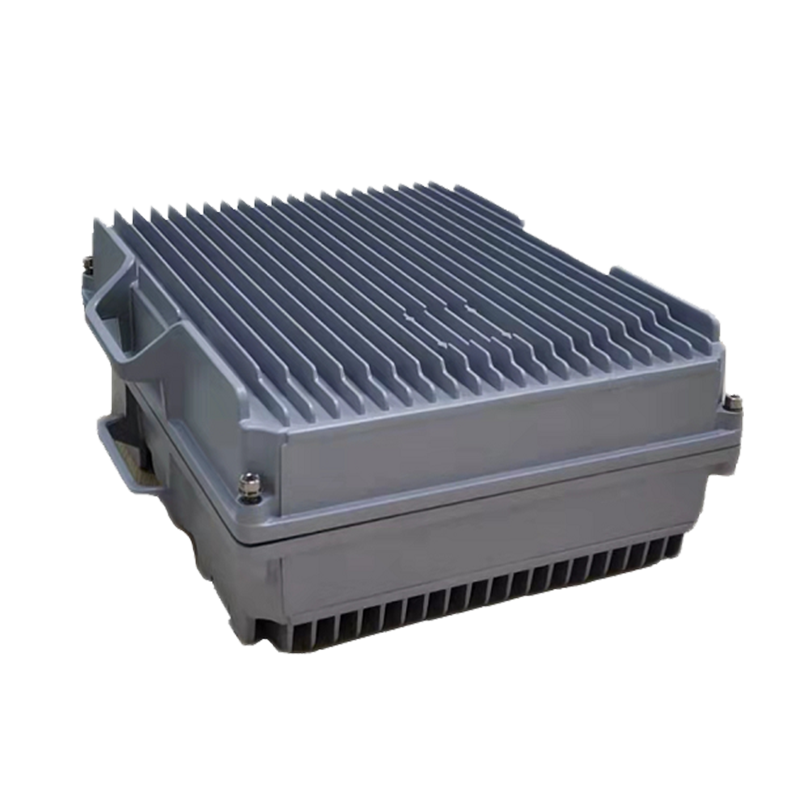
FWA platforms use licensed or unlicensed radio spectrum to deliver broadband to premises without a physical cable. They are particularly important for rural connectivity where trenching fiber or copper is prohibitively expensive. Modern FWA equipment based on 4G LTE or 5G NR standards can deliver hundreds of megabits per second with low latency. The customer-premises equipment (CPE) includes outdoor or indoor antennas that communicate with base stations, while the network side integrates with standard IP routing infrastructure. 5G mmWave FWA is gaining traction in dense urban areas as a complement to fiber rollouts.
The table below summarizes key performance and deployment characteristics across the main broadband access equipment types:
| Equipment Type | Underlying Medium | Max Speed (Typical) | Best Use Case |
| DSLAM (G.fast) | Copper | Up to 1 Gbps (short loops) | Urban MDUs, legacy infrastructure |
| OLT (XGS-PON) | Fiber | 10 Gbps symmetrical | FTTH/FTTB greenfield |
| CMTS (DOCSIS 3.1) | Coaxial / HFC | 10 Gbps down / 2 Gbps up | Cable operator network upgrades |
| FWA Base Station (5G NR) | Radio Spectrum | 500 Mbps–2 Gbps typical | Rural coverage, rapid deployment |
Choosing and deploying data broadband access equipment involves several technical and operational factors beyond raw speed ratings. Network architects must evaluate these dimensions carefully to avoid costly redesigns after deployment.
The broadband access equipment sector is undergoing significant transformation driven by software-defined networking principles, multi-gigabit subscriber demand, and government-funded rural broadband programs. Several trends are directly reshaping product development and procurement decisions.
Virtualization is perhaps the most disruptive shift. Virtual OLT (vOLT) and virtual CMTS (vCMTS) architectures disaggregate hardware and software, allowing operators to run access functions on commodity servers in centralized data centers rather than on proprietary appliances in the field. This reduces capital expenditure on specialized hardware and speeds up feature deployment cycles. Vendors such as Nokia, Calix, and Ciena are actively promoting disaggregated access platforms alongside traditional integrated hardware.
Multi-technology access platforms are also gaining traction. Rather than deploying separate equipment for DSL, fiber, and wireless subscribers, some operators are deploying converged access platforms that handle multiple access types from a single chassis. This approach simplifies operations and reduces the physical footprint in exchange facilities where space is constrained.
Government programs in the United States, European Union, and across Asia-Pacific are funding aggressive fiber expansion into underserved communities. This is creating substantial demand for OLT equipment and FTTH CPE, while simultaneously driving price competition among vendors and opening opportunities for open-source hardware initiatives under frameworks like the Telecom Infra Project (TIP).
With multiple vendors competing across each equipment category, procurement teams benefit from a structured evaluation approach. Rather than selecting based on headline speeds alone, the following criteria offer a more complete picture:
Data broadband access equipment does not operate in isolation. It is the physical and logical interface between a carrier's transport network and the end user's digital life. Its performance determines whether a household can stream 4K video without buffering, whether a small business can host cloud applications reliably, or whether a hospital can support real-time telemedicine services. As applications become more latency-sensitive and bandwidth-intensive, the pressure on access equipment to deliver consistent, high-quality connectivity grows correspondingly.
Service providers that invest in purpose-fit access equipment, maintain forward-compatible platforms, and embrace software-defined management frameworks are better positioned to meet subscriber expectations over the next decade. For equipment buyers, network engineers, and policy planners alike, understanding the capabilities and constraints of each technology category is foundational to building networks that serve communities effectively and economically.
top

E-mail:[email protected]

Telphone:+86-15967387077

FAX:+86-0571-82554407

Phone:+86-15967387077
QR code on
mobile phone