GPON OLT Systems Form the Backbone of Fiber Broadband Networks
A Gigabit Passive Optical Network Optical Line Terminal, commonly known as a GPON OLT, sits at the core of modern fiber-to-the-home and fiber-to-the-building networks. It manages the connection between a service provider's central office and the optical network units installed at customer premises, distributing bandwidth, enforcing service policies, and enabling the delivery of internet, voice, and video services over a single fiber infrastructure. This guide explains how GPON OLT systems work, what specifications matter most, and how to approach deployment planning.
What a GPON OLT Does in the Network
The OLT functions as the central hub of a passive optical network, converting electrical signals from a service provider's core network into optical signals that travel over fiber to end users. On the downstream path, it broadcasts data to all connected optical network units (ONUs) or optical network terminals (ONTs) using time-division multiplexing, while on the upstream path it coordinates timing so that each ONU transmits data without colliding with others sharing the same fiber.
Because GPON is a point-to-multipoint architecture, a single OLT port can serve multiple subscribers through a passive optical splitter, reducing the amount of fiber and electronics needed compared to point-to-point designs. This shared architecture is what makes GPON economically attractive for large-scale residential and enterprise fiber rollouts.
Core Architecture of a GPON Network
A typical GPON deployment consists of three main components working together to deliver fiber connectivity efficiently across a wide coverage area.
- OLT: located at the central office or headend, manages traffic and provisions services
- Optical splitter: a passive device that divides a single fiber signal into multiple paths
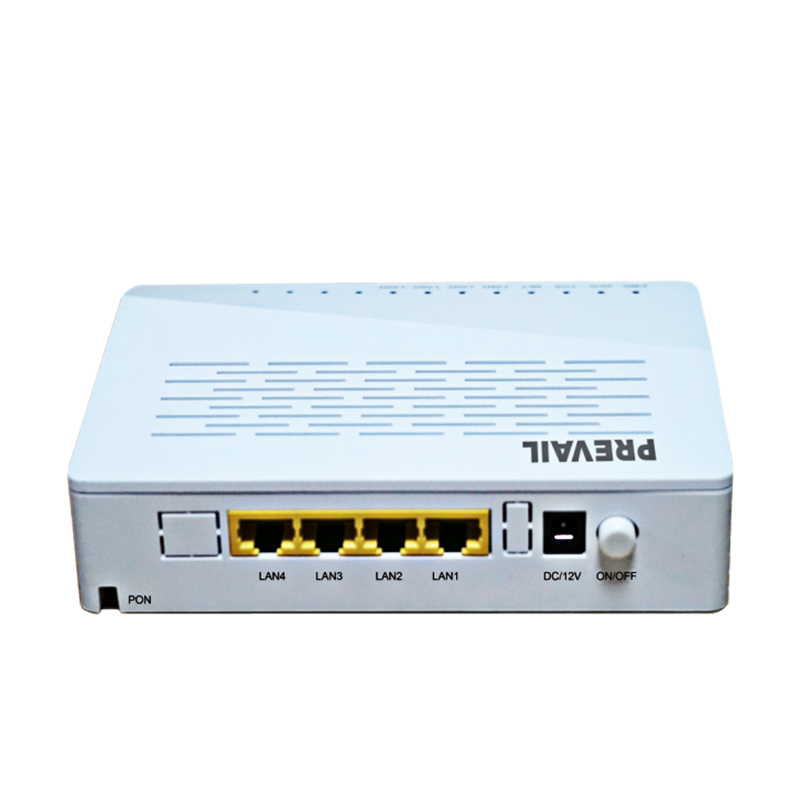
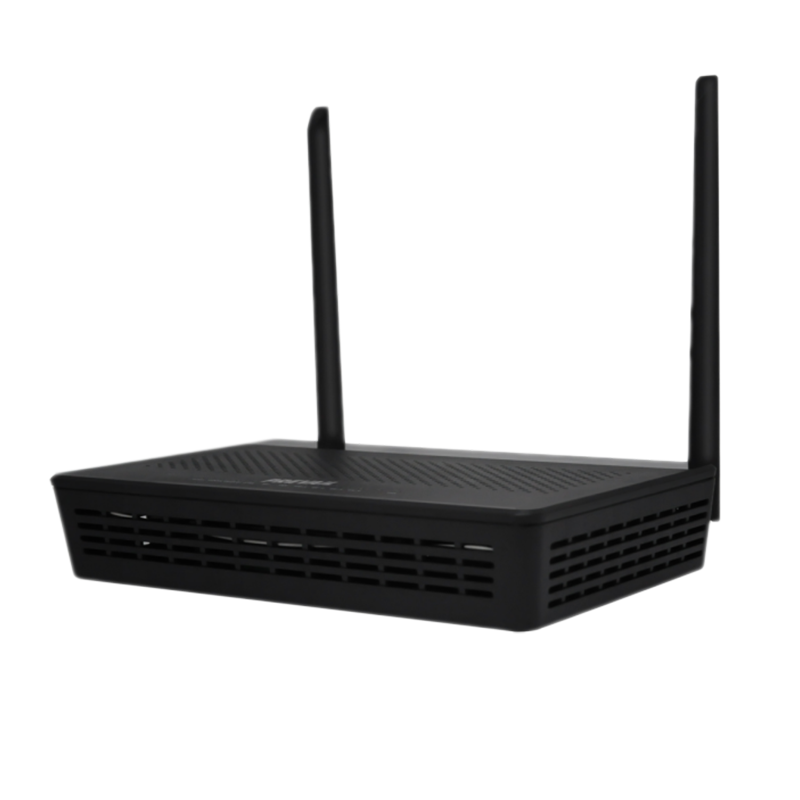
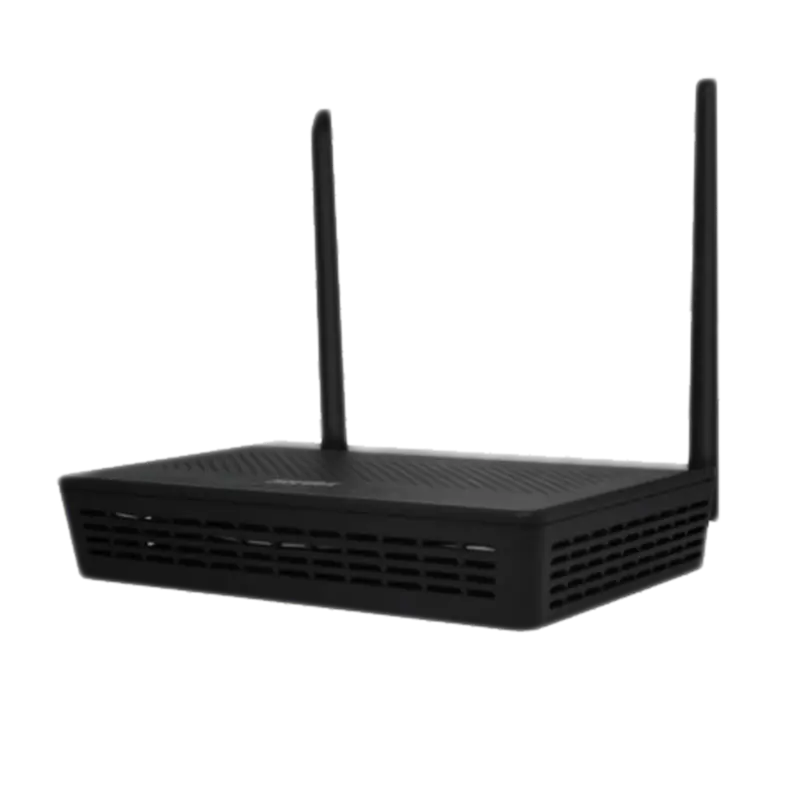
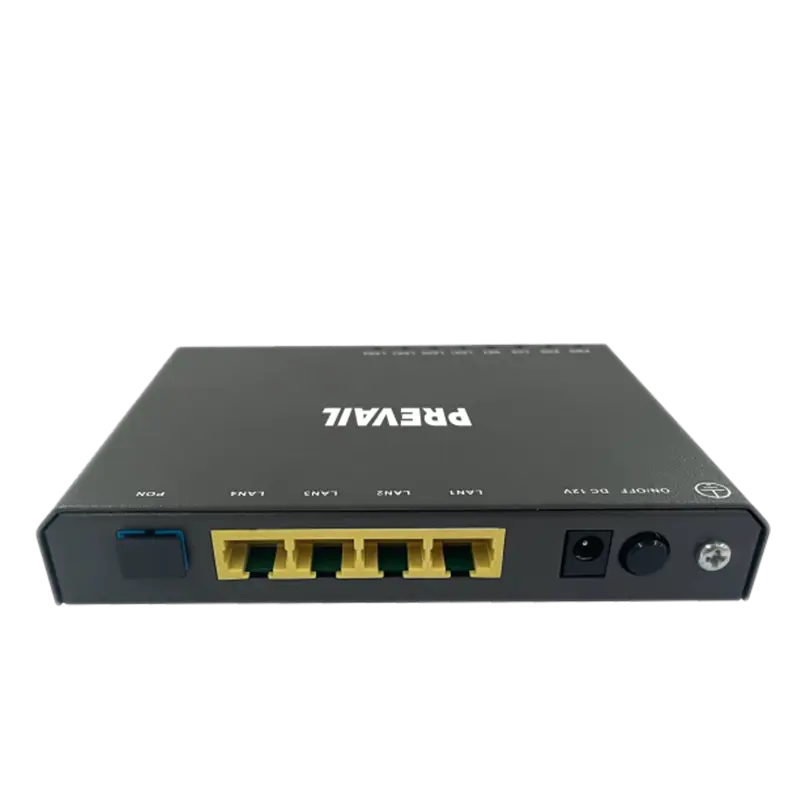
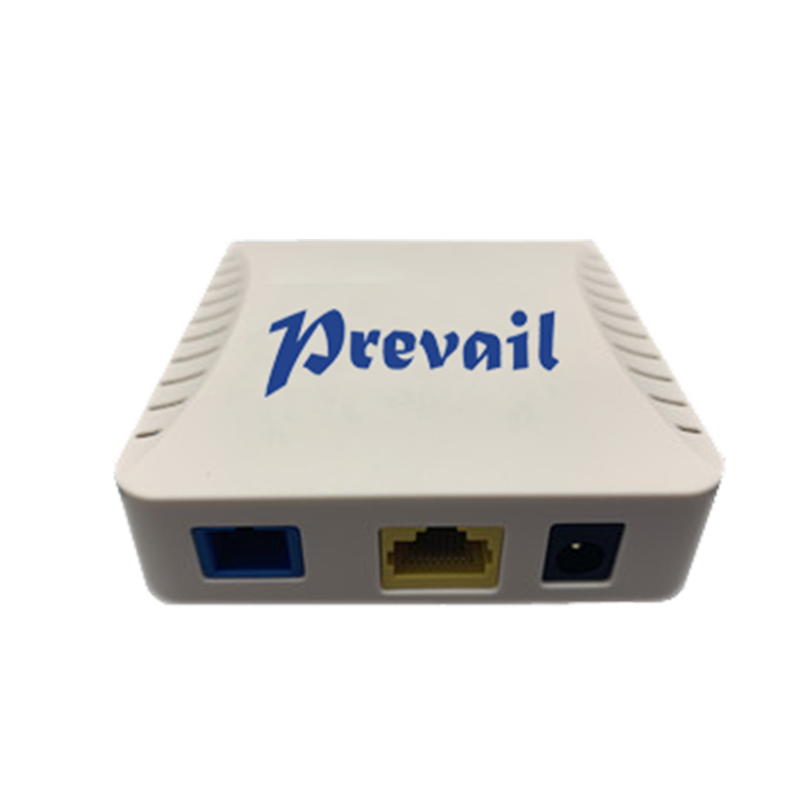
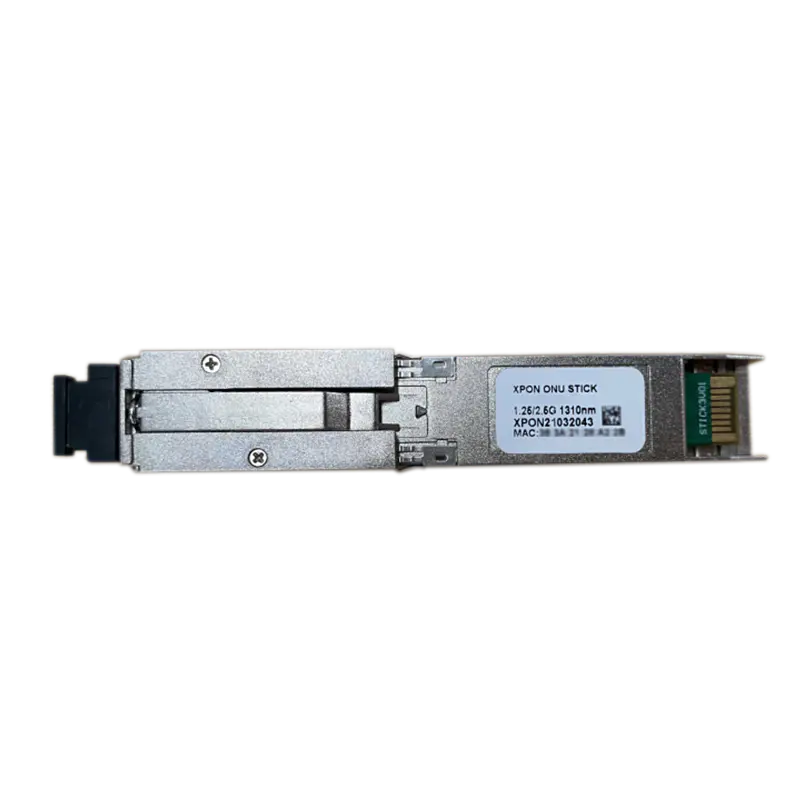
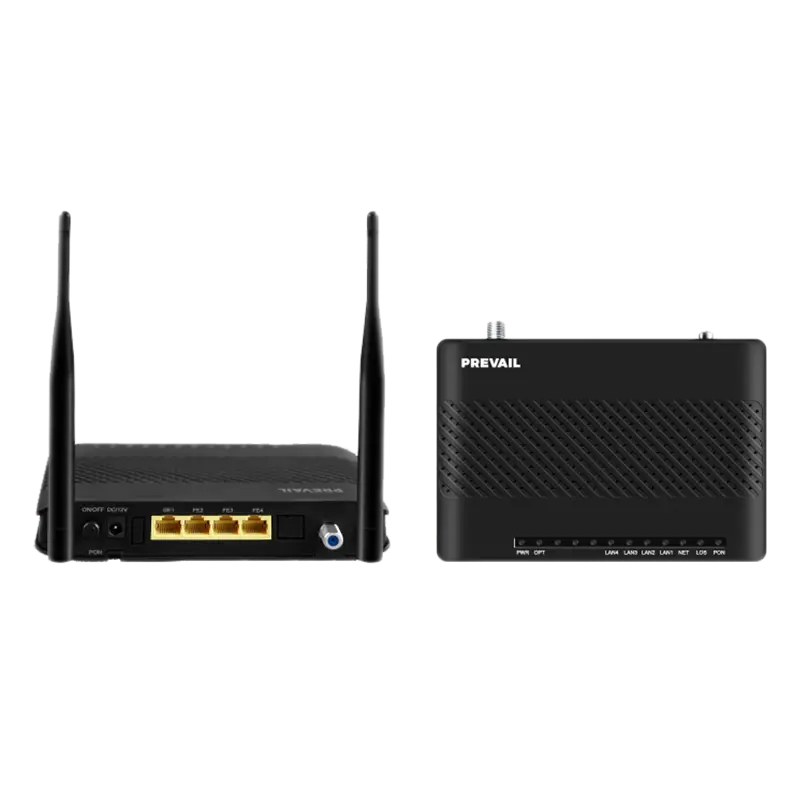
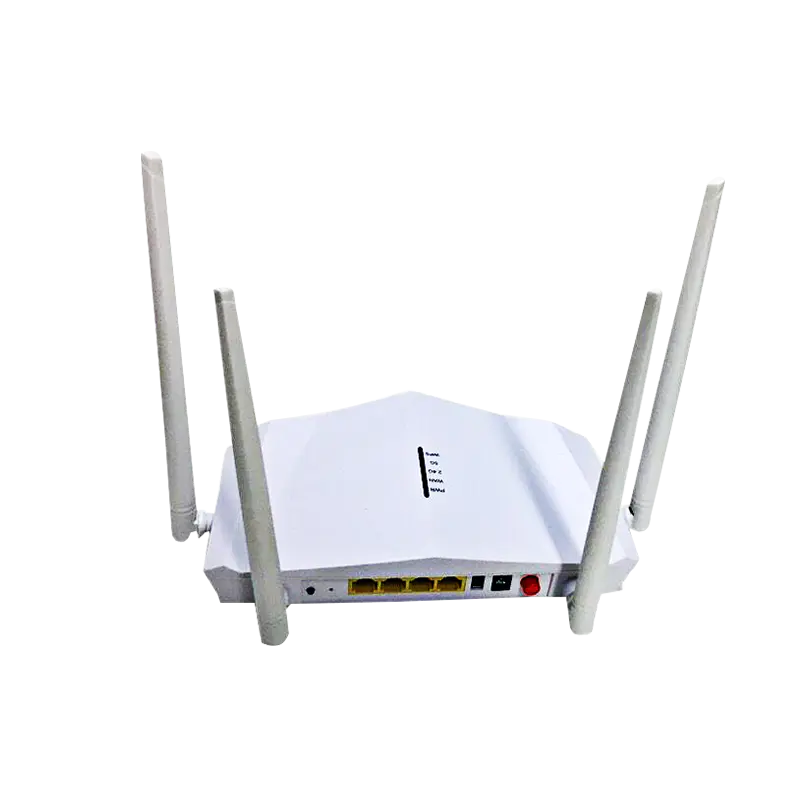
- ONU/ONT: installed at the customer premises, converts optical signals back into usable data, voice, or video
Since the splitter is passive, it requires no external power, which significantly lowers the cost of maintaining the outside plant compared to active Ethernet architectures. A single OLT PON port can typically support a split ratio of up to 1:64 or even 1:128 depending on the equipment and fiber budget, meaning one feeder fiber can ultimately serve dozens of subscribers.
Key Technical Specifications to Evaluate
When comparing GPON OLT platforms, several specifications determine how well the equipment will meet current and future network demands.
| Specification |
Typical Value |
Why It Matters |
| Downstream Bandwidth |
2.488 Gbps |
Shared capacity per PON port |
| Upstream Bandwidth |
1.244 Gbps |
Affects total subscriber upload capacity |
| Split Ratio |
1:32 to 1:128 |
Determines subscribers per port |
| Maximum Fiber Distance |
20 to 60 km |
Coverage range from OLT to ONU |
| PON Ports per Chassis |
4 to 512 |
Scalability for large deployments |
Operators should also check whether the OLT supports dynamic bandwidth allocation, which adjusts upstream bandwidth grants in real time based on subscriber demand, improving overall network efficiency during peak usage periods.
Chassis Types and Scalability Options
GPON OLTs are generally available in two form factors, each suited to different deployment scales.
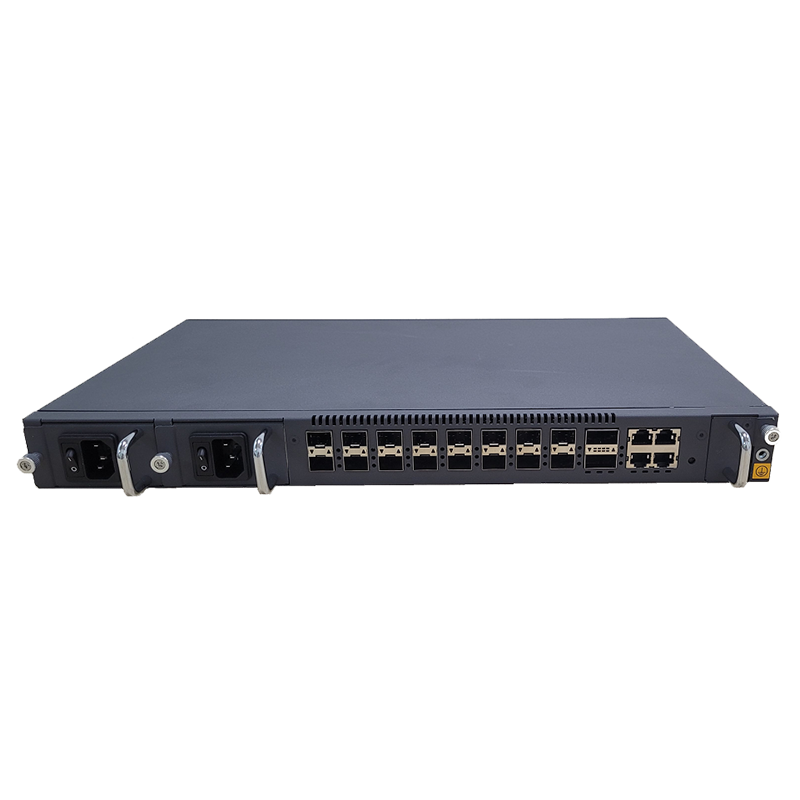
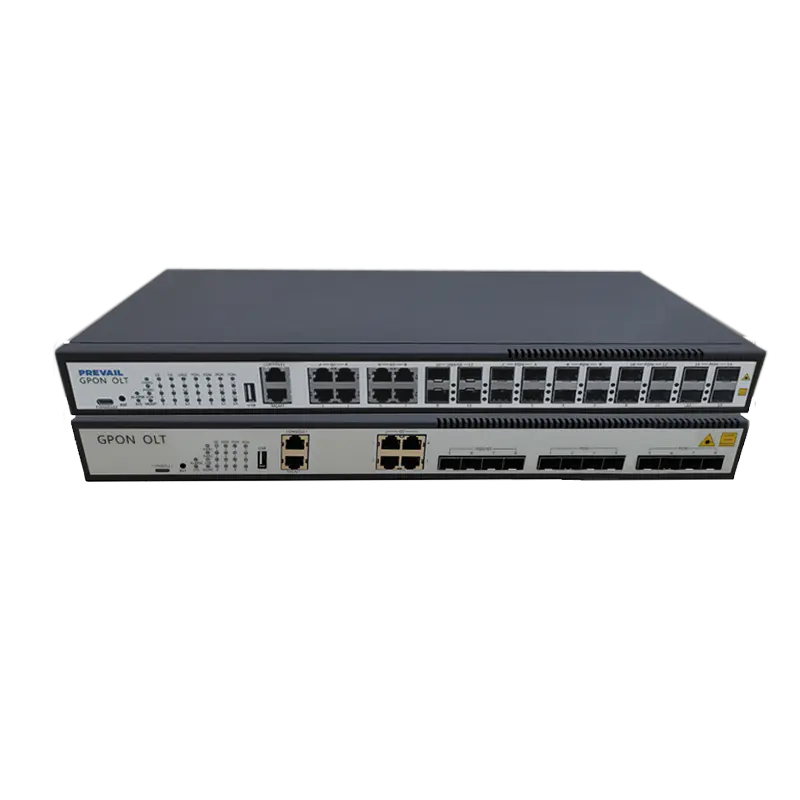
Box-Type OLT
Compact, fixed-configuration units designed for smaller deployments such as apartment complexes, hotels, or small business districts. These typically offer between 4 and 16 PON ports and are easier to install in limited space.
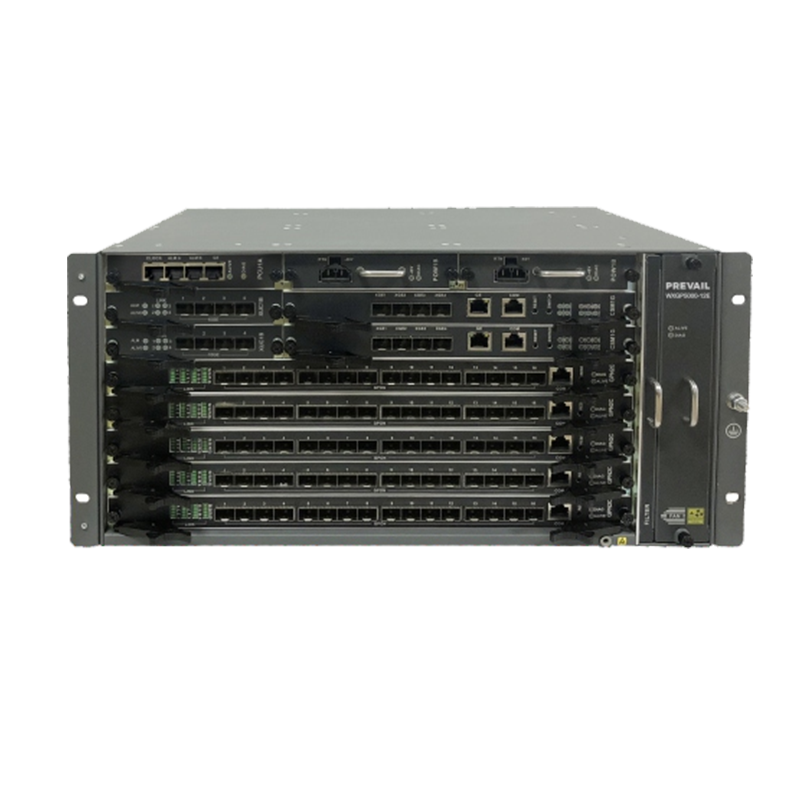
Chassis-Type OLT
Modular platforms that accept multiple line cards, allowing operators to scale capacity by adding boards as subscriber counts grow. These are better suited to citywide or regional fiber rollouts where future expansion is expected.
Planning a GPON OLT Deployment
Successful deployment starts with accurate demand forecasting. Operators need to estimate current and projected subscriber density in a coverage area to decide how many OLT ports and splitters will be required, and to select an appropriate split ratio that balances cost efficiency against available bandwidth per user.
Fiber Budget Calculation
Every GPON link has a maximum optical loss budget, usually expressed in decibels, that accounts for splitter loss, connector loss, and fiber attenuation over distance. Exceeding this budget results in degraded signal quality or complete service loss, so careful loss calculations are essential before finalizing splitter placement.
Splitter Placement Strategy
Operators typically choose between centralized splitting, where all splitters sit near the OLT, and cascaded or distributed splitting, where splitters are placed closer to subscriber clusters. Distributed splitting often reduces initial fiber costs and simplifies incremental buildouts in areas where subscriber uptake is uncertain.
Redundancy and Failover Planning
For business-critical or high-density deployments, operators often configure redundant OLT uplinks and, in some cases, Type B protection at the ONU level, where a backup fiber path automatically activates if the primary connection fails.
Common Deployment Challenges and How to Address Them
Even well-planned GPON deployments encounter recurring issues that can delay rollout or affect service quality if not addressed early.
- Signal loss from poor splicing: use certified fusion splicing technicians and test every joint
- Oversubscription during peak hours: monitor usage patterns and adjust split ratios accordingly
- Incompatible ONU firmware: verify interoperability between OLT and ONU vendors before mass deployment
- Inaccurate distance estimates: perform OTDR testing to confirm actual fiber lengths and loss
Addressing these issues during the planning and testing phases, rather than after subscribers are connected, significantly reduces truck rolls and service complaints once the network goes live.
Choosing the Right GPON OLT for Your Network
Selecting the right OLT platform depends on current subscriber count, expected growth, and the services being offered. Operators focused purely on residential broadband may prioritize cost-effective box-type units with high split ratios, while those offering business-grade services with strict uptime requirements may need chassis-based systems with redundancy features and granular quality-of-service controls.
It is also worth confirming that any chosen OLT supports standard management protocols such as SNMP and TR-069, since these simplify integration with existing network management systems and streamline remote provisioning of ONUs as the subscriber base expands. Taking a methodical approach to specification review, fiber budget planning, and vendor interoperability testing greatly increases the likelihood of a smooth, scalable GPON deployment.


 English
 русский
 Español